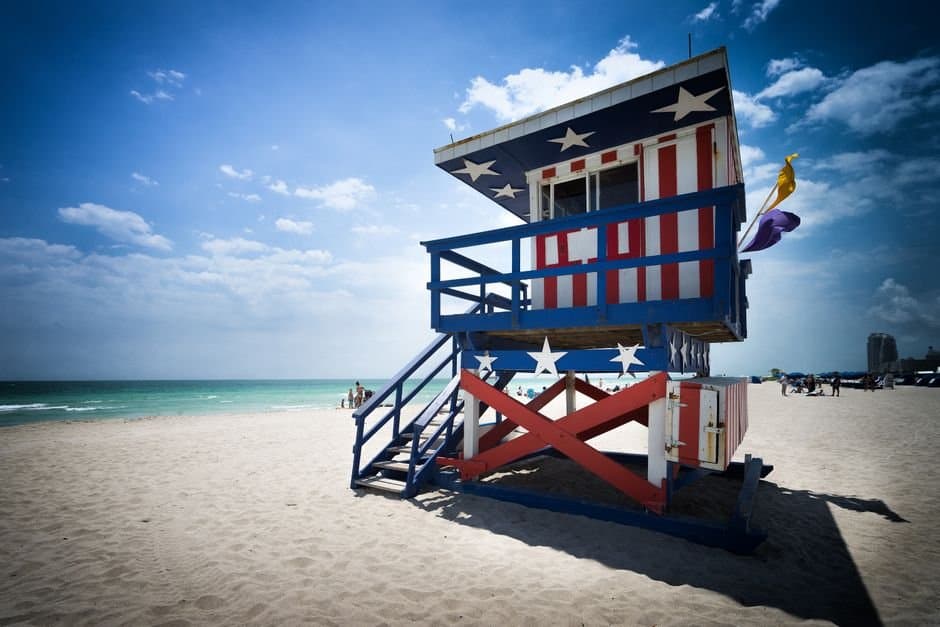
Miami International Airport (MIA)

The New Miami Aviation Hub

Miami Airport: The Leading Airport in Miami

Opened back in 1928, Miami International Airport still carries its older name of Wilcox Field, though most travelers simply call it MIA after its IATA code. It sits in an unincorporated stretch of Miami-Dade County, roughly 8 miles (13 km) northwest of downtown.

Few American gateways carry the weight that this one does. Tens of millions of passengers move through its halls every year, placing it among the busiest in the nation and second in the country for international traffic. The pandemic hit hard, yet recovery came quickly: the airport handled 50.6 million passengers in 2022, comfortably above the nearly 46 million it served in 2019.

Cargo tells a similar story. With more than 1,000 flights a day, the field links nearly 100 international destinations and 74 domestic routes. Connections reach almost every corner of the globe, but the airport truly shines as a bridge between North America, Latin America, and the Caribbean.

Miami International Airport Layout

The whole complex follows a broad “U” shape. It counts as a single terminal, yet inside it splits into three linked sub-terminals:

  • North Terminal (Blue)
  • Central Terminal (Yellow)
  • South Terminal (Red)

Six concourses (D, E, F, G, H, and J) hold 131 gates and 10 security checkpoints, four of them clustered in Concourse D.

Moving walkways tie every terminal together, so you can cross between them without wrestling heavy bags by hand. The catch is that transfers often mean exiting and clearing security a second time, which eats into a tight connection.
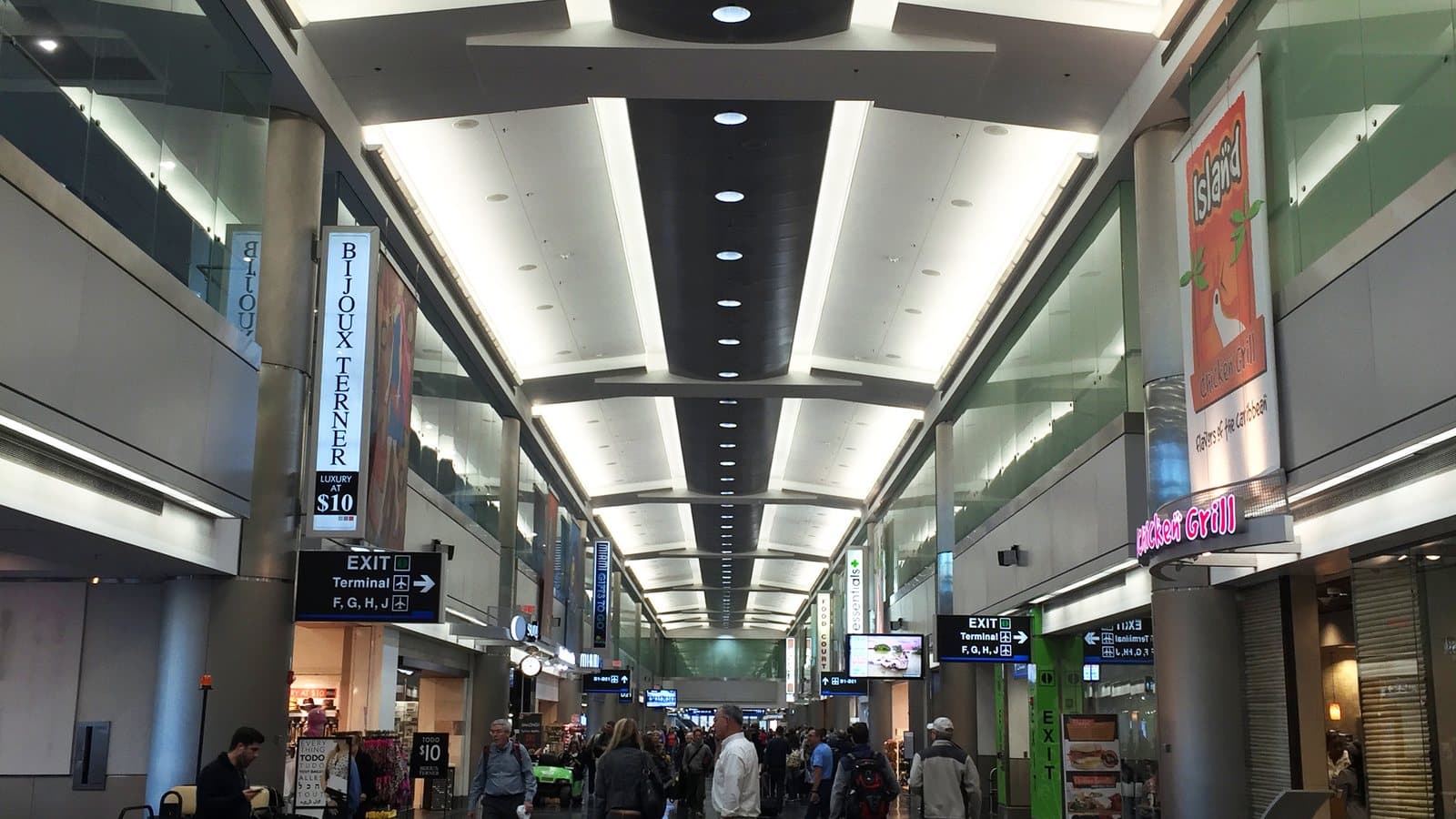
Airlines Operating at MIA

Every major carrier, domestic and international, calls here. The field ranks among American Airlines' top three hubs and stands as its main doorway to Latin America and the Caribbean.

Several other airlines run hubs from the same site, among them Atlas Air and World Atlantic Airlines, while Avianca, LATAM, and Frontier Airlines treat it as a focus city.

Parking Facilities

Drivers have several places to leave a car. The two principal structures are:

  • Dolphin Garage
  • Flamingo Garage

Between them the garages hold roughly 7,500 spaces. For the lowest price, head to the MIA Economy Park & Ride, set farther out from the terminals. Anyone collecting an arriving passenger can wait at the Cell Phone Waiting Lot.

More capacity is on the way. For now, expect tight availability, particularly between Thursday and Saturday.

Transit Options from Miami Airport

Reaching downtown and the wider city is easy from the airport. Your choices include:

  • Airport taxis
  • Car rentals
  • Private Miami airport transfers
  • Metrobus Line 7
  • Metrorail Orange Line

Services and Amenities

Comfort gets plenty of attention here, with a long list of services on hand. Among the highlights:

  • Shops and duty-free stores
  • Restaurants and bars
  • Luggage carts, wrapping, and storage
  • Business and meeting facilities
  • Pharmacies and medical services
  • Banks, ATMs, and currency exchange
  • Family services and playgrounds
  • Pet relief areas
  • Lost & Found offices
  • Yoga room and chapel
  • Park and relaxation areas
  • Airport lounges and spa facilities
  • Airport hotel
  • Free Wi-Fi
  • Travel agencies and information desks
  • Services for passengers with disabilities

Miami International Airport Contact Information

Official Name: Miami International Airport

Address: 2100 NW 42nd Ave, Miami, FL 33142

Phone: 305-876-7000

Email: [email protected]

Official Website: https://www.miami-airport.com/

The City of Miami

Sunshine, beaches, and an easy, energetic way of life: that is the picture most people hold of Miami. The shoreline pulls in visitors from across the planet, water-sport fans above all. What really sets the place apart is its mix of people, weaving together Latin American, Caribbean, European, Asian, and Middle Eastern roots.

Walk through Little Havana and you find Cuban culture at full volume, while the shopping districts, late-night scene, and street art keep the energy going elsewhere. Add the striking architecture and a calendar packed with art and music, and the city rewards every return trip with something new.

FAQs

Does Miami have 2 airports?
Miami is mainly served by two airports. MIA Airport sits on the northwest side of the city, roughly 8 miles (13km) from the center. Fort Lauderdale-Hollywood International Airport is another important hub, located 21 miles (33.7km) north of Miami in Broward County. Still, the main airport in the area is Miami International Airport.
What is Miami Airport called?
Miami International Airport usually goes by MIA Airport, after its IATA code. Its historical name is Wilcox Field, a tribute to J. Mark Wilcox, the memorable Miami congressman.
How far is Miami Airport from city?
Miami International Airport lies within 8 miles (13km) of the heart of Miami. It sits in the northwest part of the city, just a 13-minute drive from downtown.
Is Miami a big airport?
Miami Airport is vast, spread over 3,230 acres (1,335 hectares). Its U-shaped terminal actually splits into 3 buildings (North, West, and South), connected to each other by moving walkways. MIA ranks among the largest airports in the world and among the busiest for international passenger traffic.
Which airport is bigger JFK or MIA?
MIA Airport covers 3,230 acres (1,335 hectares), while JFK Airport spreads over 5,000 acres (2,023 hectares). JFK is therefore bigger than Miami Airport.
How many terminals does MIA have?
MIA Airport has 3 terminals and 6 concourses. The South terminal, the North terminal, and the Central one make up Miami Airport. All 3 terminals are interconnected and reachable via moving walkways.
How many gates are in Miami Airport?
Beyond the 3 terminals and 6 concourses, Miami International Airport has 131 gates. Concourse D has 51 gates, concourse E has 18, concourse F has 19, and concourse G has 14. Another 13 gates sit at concourse H and 15 at concourse J.
Is 1 hour enough for connecting flights in Miami?
Miami Airport ranks among the busiest U.S. airports and among the most bustling hubs in the world. One hour might be enough to catch a domestic flight, but plan on a 2-3-hour layover for international transit.

Travel guide

All news